
Ipamorelin: A Research Overview
Ipamorelin is a short synthetic pentapeptide that researchers classify as a growth-hormone secretagogue — more specifically, an agonist at the ghrelin receptor, GHS-R1a. It is frequently described in the literature as one of the more selective members of its class, and that selectivity is precisely what makes it interesting as a laboratory tool.
Why selectivity matters in a reference compound
When a research group wants to probe a single receptor pathway, a compound that binds that receptor cleanly — without pulling in neighbouring targets — produces tidier data. Ipamorelin has been used in comparative receptor-binding studies for exactly this reason, serving as a point of reference against which other secretagogues are measured under experimental conditions.
The molecule itself
As a pentapeptide it is small, stable enough to handle as a lyophilized powder, and well characterized by standard analytical methods. Preclinical in-vitro and animal-model work in the literature has focused on its binding affinity and on the signalling characteristics associated with GHS-R1a activation.
Verifying what you have
Because ipamorelin is short, its identity is easy to confirm by mass spectrometry, and HPLC will report its purity against the specification. Our guides on reading HPLC purity and interpreting a COA walk through what to check.
This overview describes areas of scientific investigation and is not a statement of any effect in humans. Ipamorelin offered here is intended for laboratory and research use only and is not for human consumption.
Research material referenced in this overview
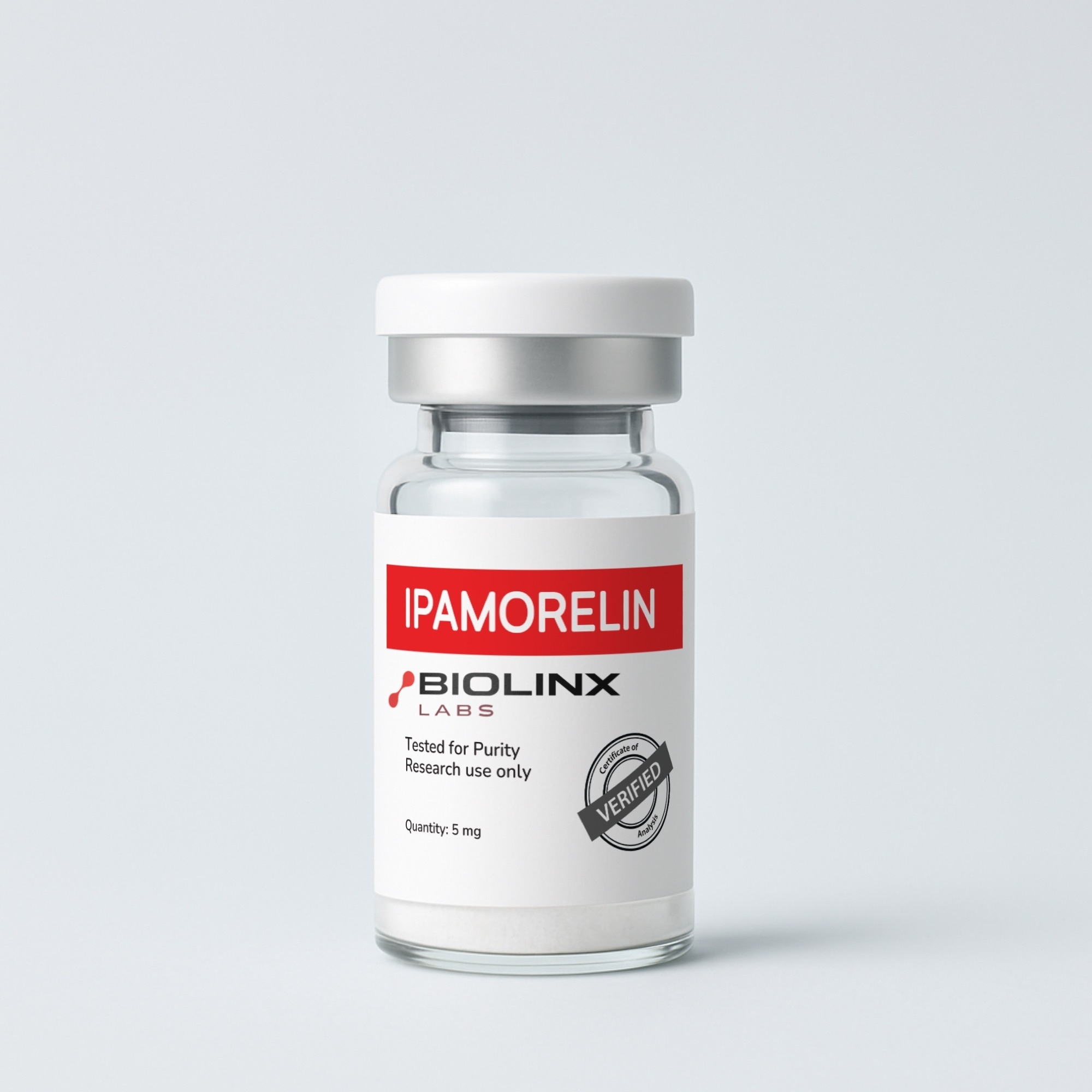
For laboratory and research use only. Not for human consumption.