
Melanotan II: A Research Overview
Melanotan II is a synthetic, cyclic analog of alpha-melanocyte-stimulating hormone (alpha-MSH). Where the natural hormone is linear and short-lived, the synthetic analog was designed with a cyclic backbone that resists rapid breakdown — a common strategy when chemists want a more tractable molecule for repeated laboratory study.
A broad melanocortin agonist
Unlike compounds engineered for a single receptor subtype, Melanotan II is generally described as a non-selective melanocortin agonist, meaning it engages more than one receptor in the family. In the research literature it has been used to examine melanocortin-receptor interactions and the downstream signalling associated with them, in in-vitro systems and animal models under defined conditions.
Why analogs get made
The story of Melanotan II is a good illustration of structure-activity research: take a natural peptide, modify it to improve stability or binding, and study how the changes alter behaviour at the target. That comparison — native hormone versus engineered analog — is itself a frequent subject of investigation.
Handling and identity
Supplied as a lyophilized powder, Melanotan II is characterized by HPLC and mass spectrometry like other cyclic peptides. Storage follows the usual cold-and-dry rule for lyophilized material covered in our storage guide.
This overview is educational and describes areas of scientific investigation. Melanotan II supplied here is intended for laboratory and research use only and is not for human consumption.
Research material referenced in this overview
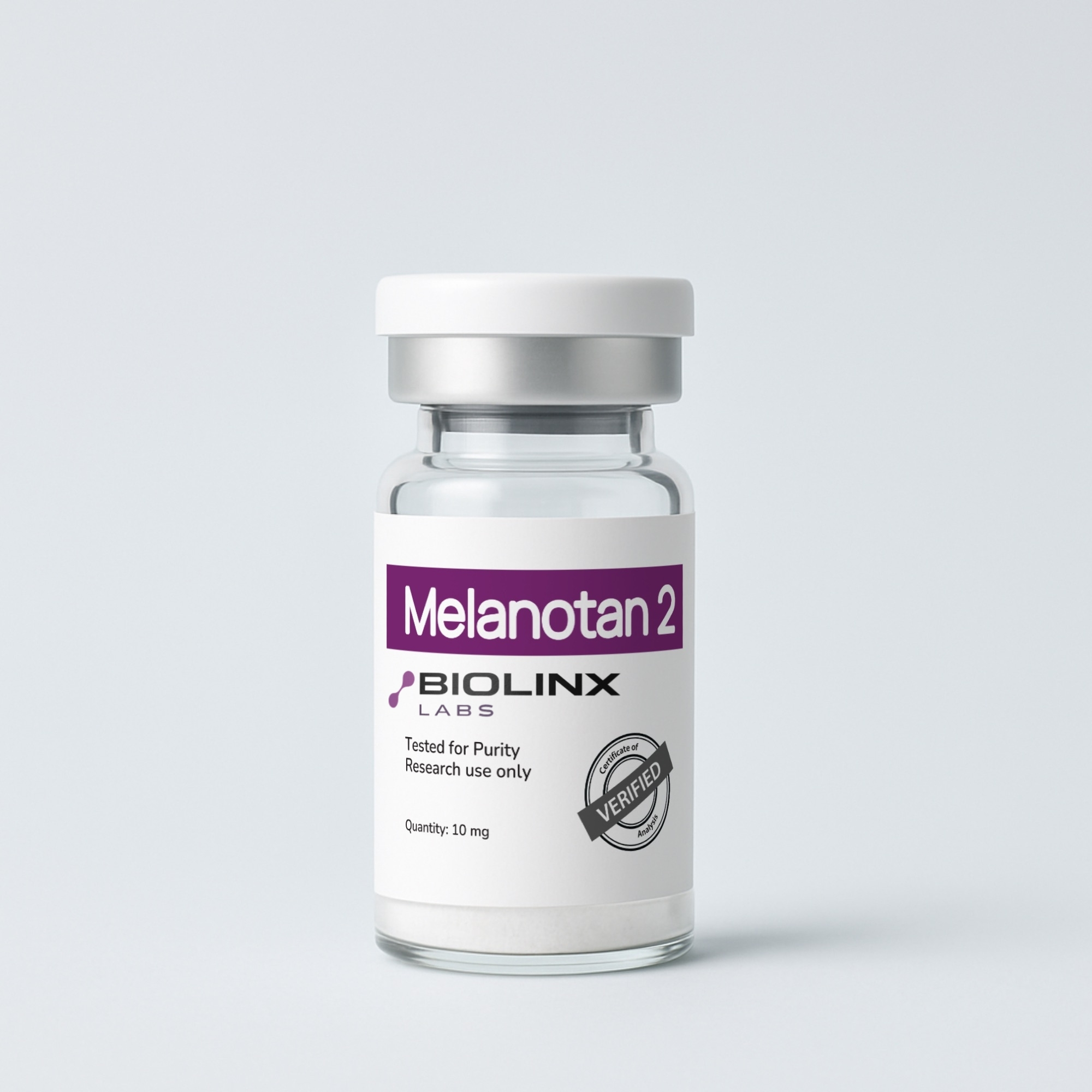
For laboratory and research use only. Not for human consumption.