
TB-500 (Thymosin Beta-4 Fragment): A Research Overview
TB-500 is the laboratory shorthand for a synthetic peptide that corresponds to an active region of thymosin beta-4, a small actin-binding protein found throughout vertebrate tissue. Rather than reproducing the full 43-amino-acid parent protein, TB-500 represents the fragment most often cited in the actin-regulation literature, which makes it a convenient tool for work focused on that single property.
The actin connection
Thymosin beta-4 is best known to cell biologists as one of the principal proteins that bind monomeric (G-) actin. By sequestering actin monomers, it participates in the equilibrium between free and polymerized actin inside the cell. Most of the published in-vitro work on the TB-500 fragment circles back to this chemistry: how the peptide associates with actin, and how that association behaves under different buffer and concentration conditions.
How it is studied
In practice, researchers handle TB-500 as a lyophilized reference material. Animal-model and cell-culture studies in the literature have examined its distribution and its interactions with cytoskeletal components under defined experimental conditions. None of this describes an outcome in people; it describes a molecule being characterized in a controlled setting.
Working with the material
Before any protocol, identity and purity are worth confirming. A peptide of this length is straightforward to verify by HPLC and mass spectrometry, and a current Certificate of Analysis should match the vial in front of you. Storage matters too — lyophilized peptides are generally kept cold and dry until use, a point covered in our note on storing research peptides.
This overview is educational and describes areas of scientific investigation only. TB-500 supplied here is intended for laboratory and research use only and is not for human consumption.
Research material referenced in this overview
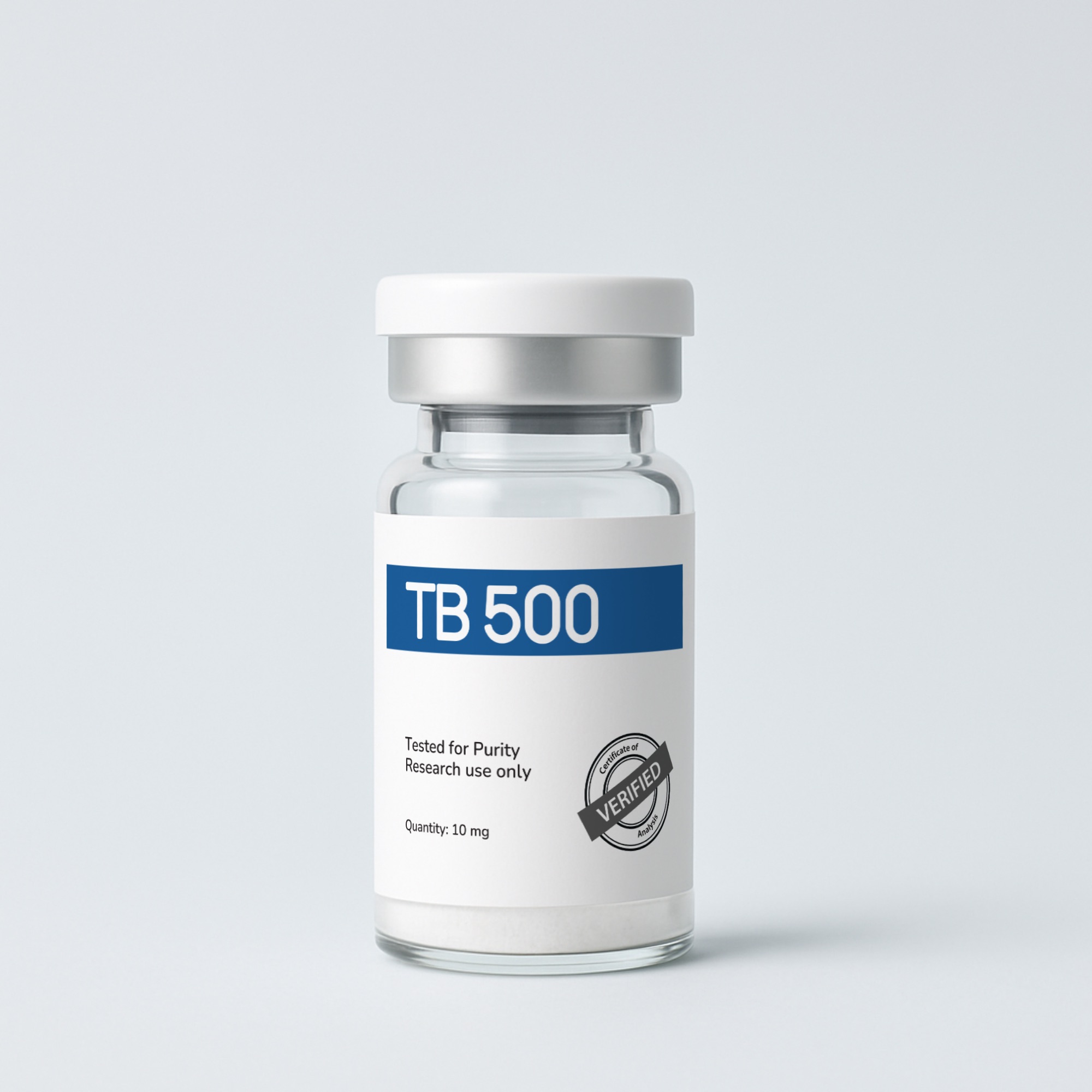
For laboratory and research use only. Not for human consumption.