
Thymosin Alpha-1: A Research Overview
Thymosin alpha-1 is a synthetic peptide that reproduces a naturally occurring thymic peptide — one of several small peptides first isolated from thymus tissue decades ago. Its history is tied to early efforts to understand what the thymus produces, and it remains a subject of laboratory interest today.
Where the research focus sits
In the published literature, thymosin alpha-1 is most often examined in the context of immune-signalling pathways. Preclinical in-vitro and animal-model studies have looked at how the peptide interacts with components of those pathways under defined experimental conditions. As with any such work, this describes a molecule under investigation, not a result in people.
Synthetic versus natural
Producing the peptide synthetically gives researchers a consistent, well-defined material to study rather than relying on extraction from tissue. Consistency is the point: the same sequence, batch after batch, verified analytically.
Material notes
Thymosin alpha-1 is supplied lyophilized and confirmed by HPLC and mass spectrometry. A current Certificate of Analysis should accompany the lot and match the vial.
This overview describes areas of scientific investigation only. Thymosin alpha-1 offered here is intended for laboratory and research use only and is not for human consumption.
Research material referenced in this overview
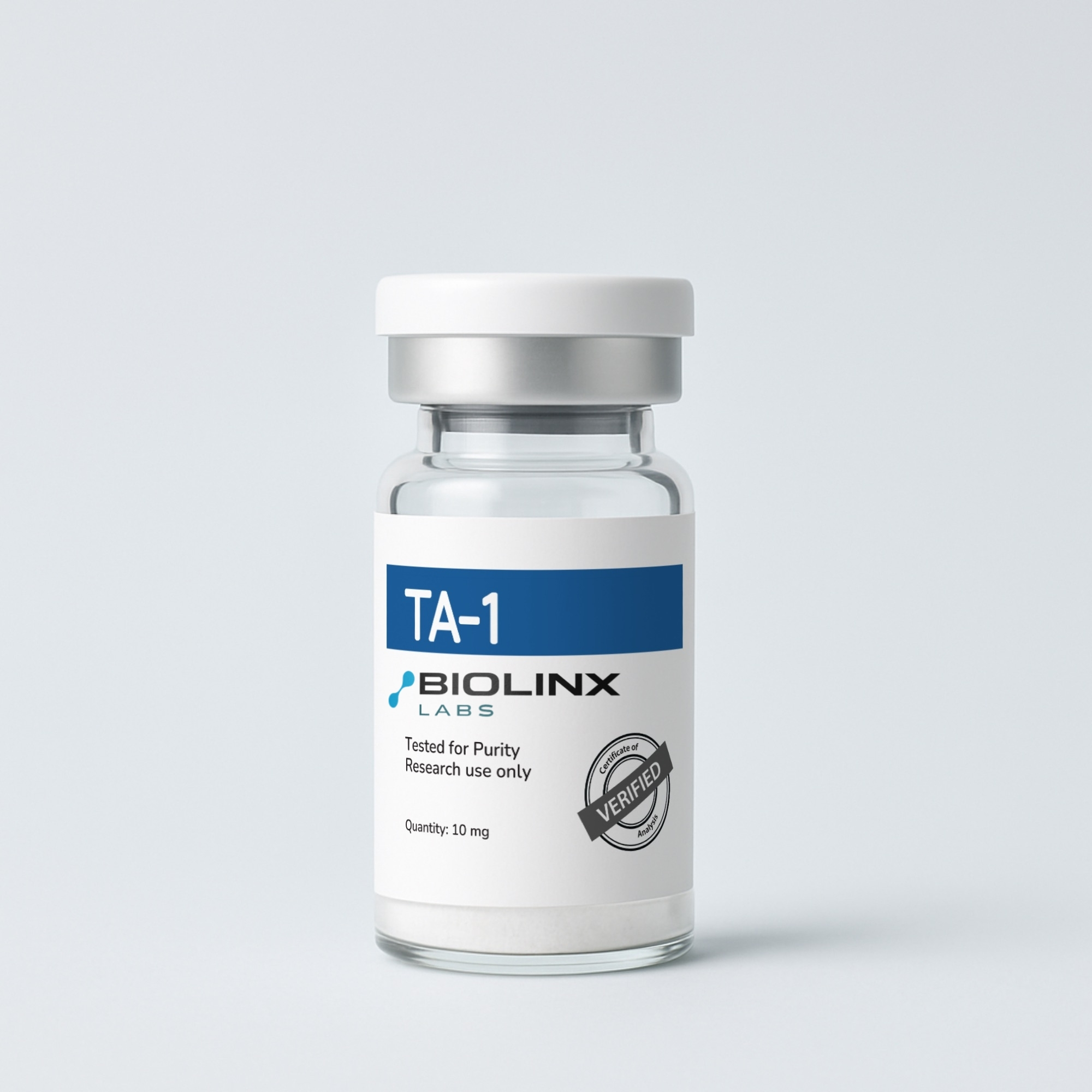
For laboratory and research use only. Not for human consumption.