
GHRH Analogs in Research
Growth-hormone-releasing hormone, GHRH, is a peptide that engages a specific G-protein-coupled receptor known as the GHRH receptor. Synthetic analogs of this hormone form a research class defined by their relationship to that receptor. Tesamorelin is a well-characterized member, a stabilized analog built on the active N-terminal fragment of the natural sequence.
The GHRH Receptor Relationship
The defining trait of a GHRH analog is that it is engineered to engage the GHRH receptor in the way the native hormone does. The natural peptide's biological activity resides largely in its first several residues, so analogs in this class are often built around that fragment with modifications that improve stability against the enzymes that would otherwise degrade the sequence. Tesamorelin illustrates this design: it carries an N-terminal modification that the literature describes as conferring resistance to rapid breakdown while preserving the receptor-binding region.
In functional assays, the GHRH receptor couples to the Gs pathway and raises cyclic AMP when engaged. Researchers use this read-out in cells expressing the receptor to confirm that an analog activates the same site as the endogenous hormone and to compare the potency of different analogs. These measurements describe ligand-receptor engagement in defined laboratory systems and nothing beyond that molecular event.
Why Analogs Are Built
The motivation for designing GHRH analogs is chemical durability. The native peptide is short-lived in biological matrices because of enzymatic cleavage near its termini, which complicates its study. By substituting or blocking the vulnerable residues, chemists produce analogs that remain intact long enough to be characterized cleanly. Tesamorelin is frequently cited as an example where a single terminal modification meaningfully changes the molecule's stability profile while keeping its receptor specificity.
Studied as a class, GHRH analogs are useful for structure-activity work. Investigators systematically alter residues to map which positions tolerate change without losing receptor binding and which are essential. That mapping clarifies how the analog and the receptor fit together, and it guides the design of further tool compounds for the same receptor.
It is worth keeping GHRH analogs distinct from peptides that act on the separate ghrelin receptor; the two systems converge on related physiology but engage different receptors entirely. Our Tesamorelin research overview covers the compound in detail, while the Ipamorelin research overview describes a ligand for the other receptor for contrast.
As a research category, GHRH analogs are defined by their shared receptor target, characterized through cAMP signaling assays, and engineered chiefly for the stability that makes them tractable subjects of preclinical in-vitro and animal-model study.
This article is provided for educational purposes and describes areas of scientific investigation only. Products referenced are intended for laboratory and research use only and are not for human consumption.
Research material referenced in this overview
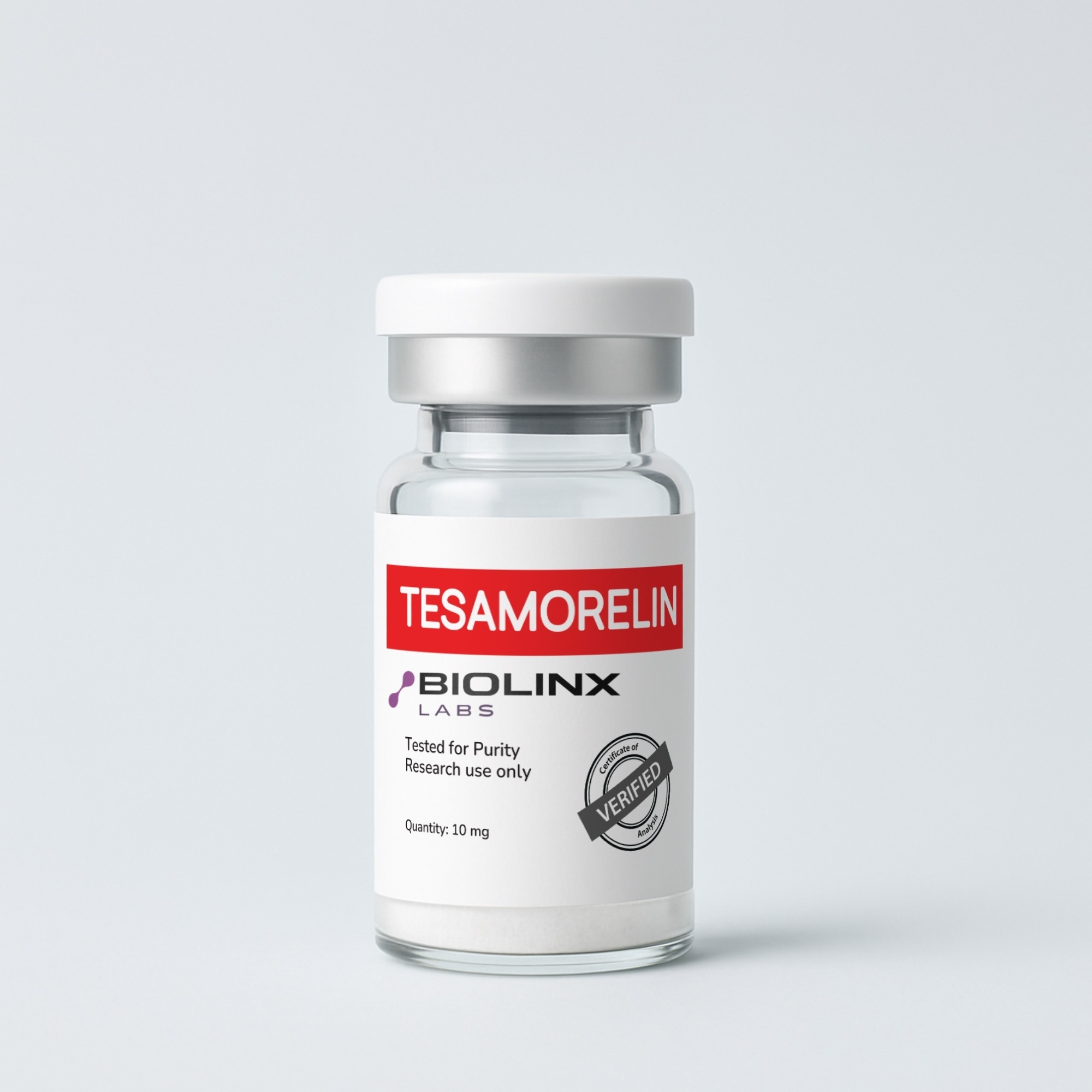
For laboratory and research use only. Not for human consumption.
Related research overviews
Thymosin Peptides: Beta-4 and Alpha-1
An overview of thymosin beta-4 actin-binding chemistry and thymosin alpha-1 molecular identity, two distinct peptides grouped under the thymosin name.
Mitochondrial-Derived Peptides: A Research Overview
An overview of MOTS-c and the mitochondrial-derived peptide class, focusing on their origin within the mitochondrial genome and how researchers identify them.
Growth Hormone Secretagogues: A Research Overview
An overview of Ipamorelin and the GHRP class as ghrelin-receptor ligands, focusing on GHS-R1a binding and receptor selectivity studied in preclinical models.