
Thymosin Peptides: Beta-4 and Alpha-1
The thymosin name covers several unrelated peptides that were originally isolated from thymus tissue fractions and grouped by source rather than by structure. Two are studied widely enough to anchor the class: thymosin beta-4 and thymosin alpha-1. They share a historical label but differ entirely in sequence, structure, and the molecular questions researchers ask about them.
Thymosin Beta-4 and Actin Chemistry
Thymosin beta-4 is a small, highly conserved peptide whose best-characterized molecular property is binding to actin. Actin is the protein that polymerizes into the filaments of the cytoskeleton, and it exists in a monomeric form, G-actin, and a filamentous form, F-actin. Thymosin beta-4 binds G-actin monomers, and the structural biology literature describes how it sequesters them, influencing the pool of monomer available for filament assembly in cell-free and cell-culture systems.
This actin-sequestering chemistry is the defining feature of the molecule. Researchers study it as a regulator of the monomer-to-filament equilibrium under controlled in-vitro conditions, using techniques that track polymerization rates and monomer availability. The peptide TB-500 is discussed in the same context, as a fragment-derived sequence associated with this actin-binding region; our TB-500 research overview addresses that relationship at the compound level.
Thymosin Alpha-1 and Its Distinct Identity
Thymosin alpha-1 is a separate molecule with no structural relationship to beta-4 beyond the shared name. It is a short acetylated peptide derived from a larger precursor protein, and it is studied for its own distinct molecular characteristics rather than for actin binding. Its sequence, its acetylated N-terminus, and its origin from the prothymosin alpha precursor are the identity markers that researchers use to define it.
Because alpha-1 and beta-4 are so different, grouping them together is mainly a matter of historical naming. The preclinical literature keeps their characterization separate: beta-4 work centers on cytoskeletal chemistry, while alpha-1 work focuses on its peptide identity and the molecular pathways it has been examined against in cell models. For compound-level detail on the alpha-1 peptide, see the thymosin alpha-1 research overview.
Understanding the thymosin group means recognizing that the label is a historical container, not a structural family. Thymosin beta-4 is studied as an actin-binding peptide, thymosin alpha-1 as a distinct acetylated sequence, and the two are characterized along entirely separate lines in preclinical in-vitro and animal-model literature. Keeping them apart is the first step in studying either one accurately.
This article is provided for educational purposes and describes areas of scientific investigation only. Products referenced are intended for laboratory and research use only and are not for human consumption.
Research material referenced in this overview
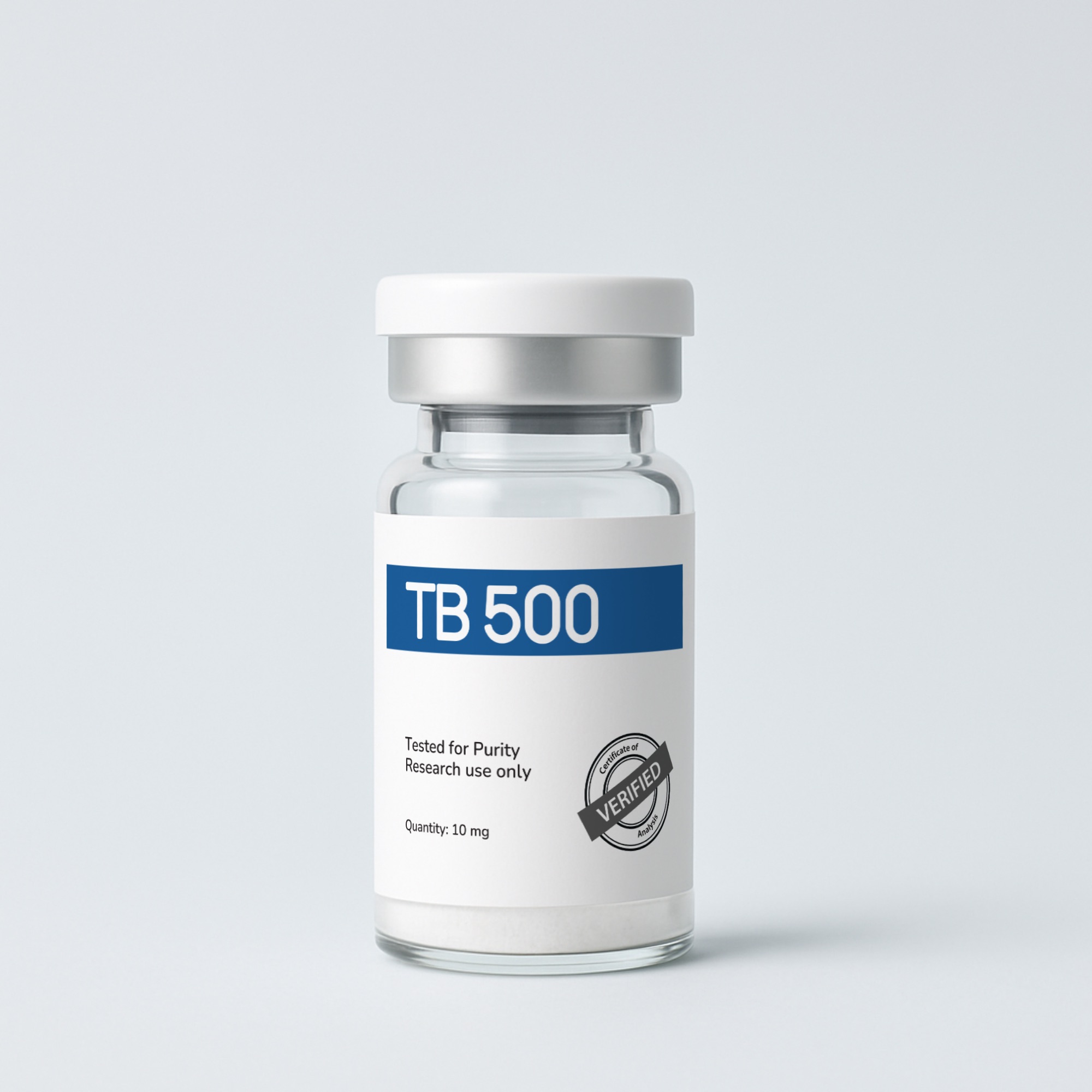
For laboratory and research use only. Not for human consumption.
Related research overviews
GHRH Analogs in Research
An overview of Tesamorelin and the GHRH analog class, focusing on the growth-hormone-releasing-hormone receptor relationship studied in preclinical literature.
Mitochondrial-Derived Peptides: A Research Overview
An overview of MOTS-c and the mitochondrial-derived peptide class, focusing on their origin within the mitochondrial genome and how researchers identify them.
Growth Hormone Secretagogues: A Research Overview
An overview of Ipamorelin and the GHRP class as ghrelin-receptor ligands, focusing on GHS-R1a binding and receptor selectivity studied in preclinical models.