
Growth Hormone Secretagogues: A Research Overview
Growth hormone secretagogues are a class of synthetic peptides defined by a shared molecular target: the growth hormone secretagogue receptor, GHS-R1a. This receptor is the same site engaged by the endogenous peptide ghrelin, so the class is sometimes grouped under ghrelin-receptor ligands. The growth-hormone-releasing peptides, abbreviated GHRP, form the historical core of this group, and Ipamorelin is among the more structurally selective members.
The GHS-R1a Target
GHS-R1a is a G-protein-coupled receptor that signals through the Gq pathway, mobilizing intracellular calcium when activated. In binding assays and calcium-flux read-outs, researchers measure how tightly a given secretagogue occupies the receptor and how efficiently it triggers the downstream signal. These functional assays in cell lines are the standard way the preclinical literature characterizes the class under defined experimental conditions.
The GHRP series, including the early hexapeptides and later analogs, was developed as small synthetic ligands for this receptor before the natural ligand was identified. Ipamorelin is described in the literature as notable for its receptor selectivity profile: structure-activity studies report that it engages GHS-R1a while showing limited cross-reactivity at other receptors that some earlier secretagogues also touched. That selectivity is the property researchers most often highlight when classifying it within the group.
Selectivity as the Defining Question
Within the secretagogue class, the analytical interest is comparative. Different members vary in how cleanly they bind GHS-R1a versus related receptors, and that spread in selectivity is what distinguishes one tool compound from another. Investigators studying receptor pharmacology use the class to ask which structural features of a peptide determine receptor preference, varying residues and ring closures to track the effect on binding.
The mimetic relationship to ghrelin makes these peptides useful reference ligands. Because the endogenous ligand and its receptor are well characterized, a synthetic compound can be benchmarked against the natural signal in the same assay, giving a clear molecular comparison. This is receptor-occupancy and signal-transduction work, observed in vitro and in animal-model systems, not an outcome attributed to any organism.
Readers studying related peptide classes that act through distinct receptor systems may find the Ipamorelin research overview and the Tesamorelin research overview useful, since the two engage entirely different receptors and illustrate how the literature keeps such mechanisms separate.
Taken as a whole, growth hormone secretagogues are characterized by their shared GHS-R1a target, their Gq-coupled calcium signaling, and the range of receptor selectivity across the GHRP family. Those three traits define the class and frame how preclinical researchers study its members as receptor-pharmacology tools.
This article is provided for educational purposes and describes areas of scientific investigation only. Products referenced are intended for laboratory and research use only and are not for human consumption.
Research material referenced in this overview
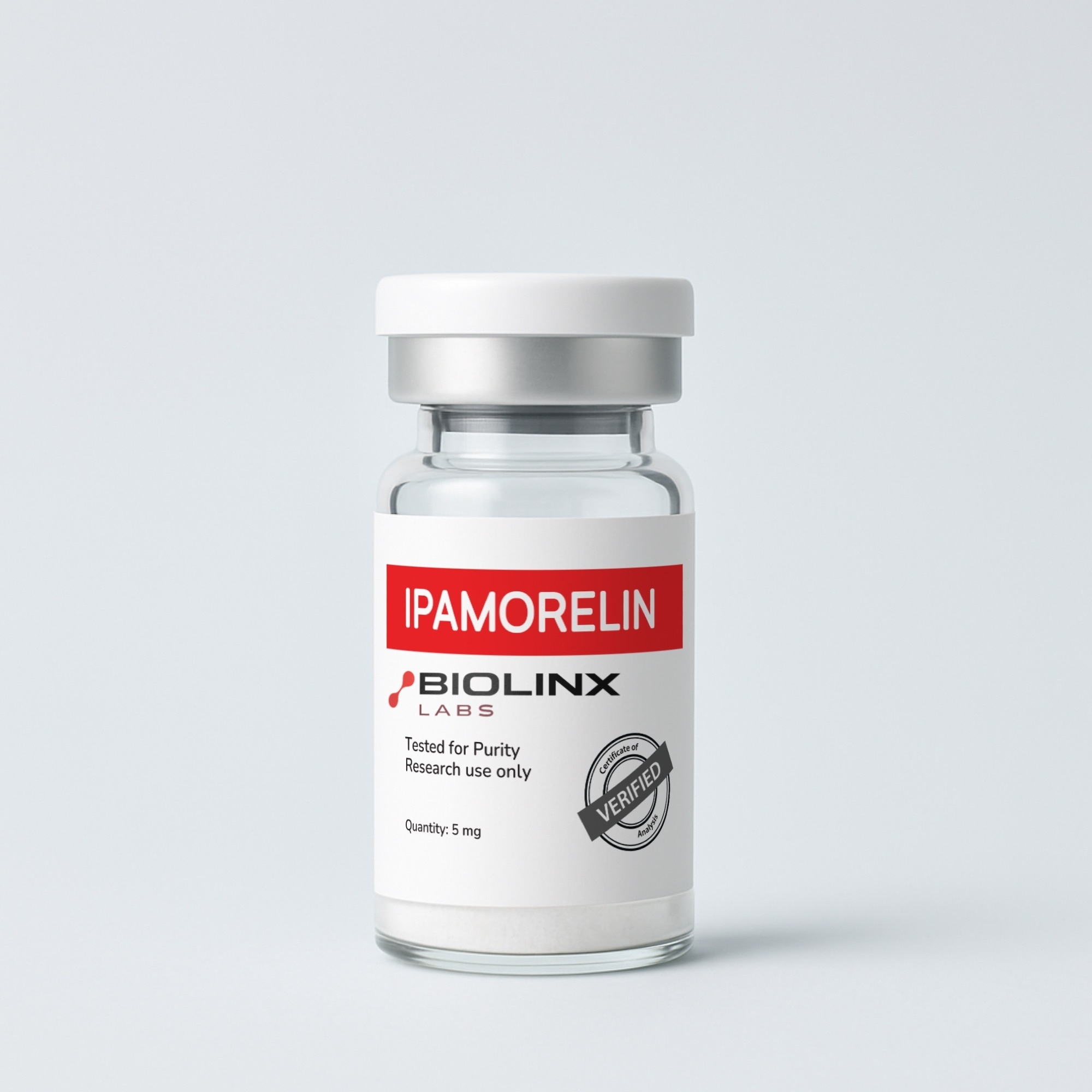
For laboratory and research use only. Not for human consumption.
Related research overviews
Thymosin Peptides: Beta-4 and Alpha-1
An overview of thymosin beta-4 actin-binding chemistry and thymosin alpha-1 molecular identity, two distinct peptides grouped under the thymosin name.
GHRH Analogs in Research
An overview of Tesamorelin and the GHRH analog class, focusing on the growth-hormone-releasing-hormone receptor relationship studied in preclinical literature.
Mitochondrial-Derived Peptides: A Research Overview
An overview of MOTS-c and the mitochondrial-derived peptide class, focusing on their origin within the mitochondrial genome and how researchers identify them.